Your AC filter is one of the simplest, cheapest parts of your system. It's also one of the most neglected. In South Florida, where air conditioners run nearly every day of the year, a clogged or overdue filter can cause real damage, from frozen coils and sky-high electric bills to full system failure.
This guide covers everything you need to know: what your filter actually does, the signs it's time to change it, how often you need to replace it in Florida's climate, and what goes wrong when you don't.
Quick Answer
If you haven't changed your AC filter in more than 30 days (for a standard 1-inch filter), change it now. In Florida's hot, humid climate, dirty filters are one of the leading causes of frozen coils, high energy bills, mold growth, and premature system failure. Most homeowners should change their filter every 30 days. |
What Does Your AC Filter Actually Do?
Most people assume the filter's job is to clean the air you breathe. That's partly true, but its primary function is to protect your HVAC system from dust, debris, and contaminants that would otherwise coat your coils, clog your blower, and wear down your equipment.
The filter sits between the return air duct and your air handler, trapping particles before they reach the system's internal components. Without it (or with a clogged one) airflow becomes restricted and the system works harder to compensate.
Filter Types and What They Actually Filter
Not all filters are equal. Here's a quick breakdown:
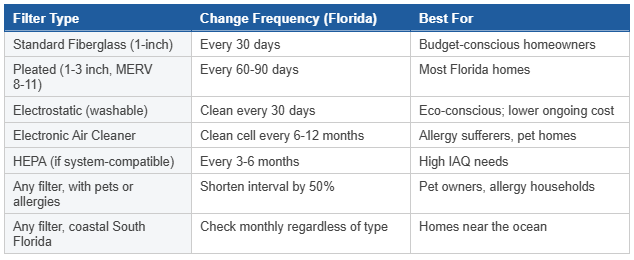
Standard Fiberglass (MERV 1-4): Catches large dust and debris. Inexpensive, needs to be changed monthly. Does not remove allergens, mold spores, or fine particles.
Pleated Filters (MERV 8-11): Better capture rate for dust, pollen, and pet dander. Change every 60-90 days. A solid choice for most Florida homes.
Electrostatic Filters (MERV 10-12): Uses static charge to attract particles. Some are washable and reusable. More expensive upfront but cost-effective long-term.
Electronic Air Cleaners (MERV 14-16): Uses a fan and electrostatic plates to capture up to 95% of airborne particles. Best option if someone in the home has allergies or respiratory issues.
HEPA Filters (MERV 17+): Capture 99.97% of particles, including bacteria and mold spores. Not compatible with all HVAC systems due to airflow restriction. Consult a technician before switching.
Important: Never swap filter types without checking with a professional. Even if a filter fits the housing, the wrong MERV rating can restrict airflow and damage your system.
Signs Your AC Filter Needs to Be Changed
You don't always have to wait for a scheduled date. Watch for these signs that your filter is overdue:
Weaker airflow from your vents than usual
Your home takes longer to reach the thermostat setting
You notice more dust settling on furniture and surfaces
There's a musty or stale smell when the AC kicks on
Your energy bills have increased without a change in usage
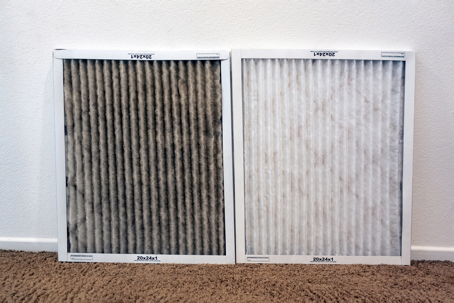
The filter itself looks visibly gray, matted, or completely covered in debris
If you're seeing any of these, check the filter now. A visual inspection takes 30 seconds and can prevent an expensive service call.
What Happens When You Don't Change Your AC Filter?
This is where deferred maintenance gets expensive. Here's what a dirty filter does to your system over time.
1. Restricted Airflow and Reduced Cooling
A clogged filter blocks air from moving freely through the system. Your AC starts running longer cycles to meet the thermostat setting, and eventually the airflow becomes so restricted that rooms don't cool evenly. If left long enough, the system can overheat and shut down entirely.
2. Frozen Evaporator Coils
This is one of the most common and costly results of a dirty filter. When warm air can't reach the evaporator coil, the refrigerant inside it drops below freezing and ice forms on the coil. You'll notice your AC blowing warm or no air at all. Frozen coils can lead to water leaks, compressor stress, and expensive repairs. In South Florida, this often happens during peak heat when the system is already working hardest.
3. Higher Energy Bills
Your blower motor works harder to pull air through a clogged filter, which increases energy consumption. Even a moderately dirty filter can raise your energy usage by 5-15%. Over the course of a Florida summer, that adds up fast.
4. More Dust and Worse Air Quality
A saturated filter loses its ability to trap particles and may start pushing them back into the air stream. Dust accumulates on your coils, blower wheel, and inside your ducts. Homeowners with allergies often notice an increase in symptoms before they realize the filter is the cause.
5. Mold Growth
Florida's humidity creates ideal conditions for mold. When airflow is restricted, moisture builds up in the air handler, drain pan, and ductwork. Mold can spread quickly from there, causing musty odors, triggering respiratory issues, and in serious cases requiring duct cleaning or remediation. Regular filter changes are the most effective first line of defense against moisture-related mold.
6. Premature System Failure
This is the most serious consequence. Over time, restricted airflow burns out blower motors, stresses the compressor, and causes components to fail years ahead of their expected lifespan. Many major HVAC failures in Florida trace directly back to long-term airflow restriction from a neglected filter. Changing your filter consistently can add years to your system's life.
Do You Have Pets? Change Your Filter More Often
Pet owners in South Florida should plan on more frequent filter changes. Pet dander, hair, and the airborne particles pets introduce significantly increase the load on your filter. A 30-day schedule becomes a two-week schedule for homes with one or more pets.
Pet dander is also a major allergen trigger. If anyone in your home has allergies or asthma, a clogged filter full of pet dander will make symptoms noticeably worse. Upgrading to a pleated or electrostatic filter and changing it regularly is one of the most impactful indoor air quality improvements you can make.
How Often Should You Change Your AC Filter in Florida?
The standard manufacturer guidance doesn't account for Florida's conditions. Running your AC year-round, high humidity, coastal salt air, and dustier sandy environments all mean filters get dirty faster here than in other states. Use this as your baseline:
Regular Maintenance Does More Than Filter Changes
Changing your filter is the most important thing you can do between professional visits, but it's only one part of keeping your AC healthy in South Florida's climate.
An annual or bi-annual tune-up with Cousin's Air includes:
Evaporator and condenser coil cleaning
Drain line flush to prevent overflow and mold
Airflow and refrigerant level check
Electrical component inspection
Moisture and mold evaluation
Filter assessment and recommendations
Regular maintenance prevents the most expensive breakdowns and keeps your system running efficiently year-round. Our Maintenance Agreement customers also get priority scheduling, which matters when it's 95 degrees and your AC goes out on a Friday.
Frequently Asked Questions
Can a dirty air filter cause your AC to freeze up?
Yes. A clogged filter blocks warm air from reaching the evaporator coil. Without enough warm airflow, the refrigerant inside the coil drops below freezing and ice forms. Frozen coils are one of the most common AC service calls in South Florida during hot weather.
What MERV rating do I need for my Florida home?
Most Florida homeowners do well with a MERV 8-11 pleated filter. It balances particle capture with adequate airflow. Higher MERV ratings (13+) trap more particles but restrict airflow more significantly, which can stress your system. If you need higher filtration for health reasons, consult a technician about whether your system can handle it or whether an electronic air cleaner is a better fit.
Is a more expensive filter always better?
Not necessarily. A higher MERV filter traps more particles but also reduces airflow, which can strain your blower motor and increase energy consumption. The best filter is the one that's appropriate for your system's specifications and gets changed on schedule. A cheap filter changed monthly is better for your system than a premium filter left in for six months.
How do I know if my AC filter is bad?
Pull the filter out and hold it up to the light. If you can't see light through it or it's visibly gray and matted with dust, it's time to replace it. Other signs include weaker airflow from vents, your AC running longer cycles, increased dust on furniture, musty odors from the vents, or a sudden spike in your electric bill.
Schedule Service with Cousin's Air
If your filter is overdue, your AC is running constantly, or you're not sure when it was last serviced, Cousin's Air is ready to help. We've been taking care of South Florida homes since 1995. Our NATE-certified technicians will inspect your system, evaluate your filter needs, check airflow, and make sure everything is running the way it should.
Call (954) 228-5965 or schedule online to get started.