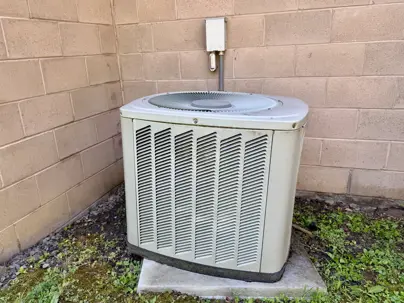
You should not see a brand-new air conditioner already sitting crooked, buzzing louder than it used to, or needing a refrigerant top-off every summer. In South Florida, we see this all the time. The outdoor unit starts to lean as the concrete pad settles, and before long a system that should have years of life left is suddenly leaking or breaking down.
Most homeowners are told this is just “Florida ground” or bad luck. The slab shifts a little, the unit leans, and it is treated as a cosmetic issue. Meanwhile, you keep paying for repairs on a fairly new system without anyone clearly connecting the dots. In reality, uneven slab settling in our climate can twist copper refrigerant lines, stress joints, and quietly damage a system from the day it is installed.
At Cousin's Air, Inc., we have been working on air conditioning systems in Palm Beach, Broward County, and surrounding South Florida communities since 1995. Our NATE-certified technicians regularly trace early failures back to how the outdoor unit was set on its slab and how the line set was run. In this article, we will walk through how slab settling in Florida actually breaks AC systems, what signs to look for at your home, and what can be done before a minor tilt turns into major damage.
Protecting your new AC investment starts with a level foundation. Reach out to our NATE-certified team at (954) 228-5965 or contact us online for a professional inspection.
Why AC Slab Settling Is a Hidden Problem in Florida
South Florida is hard on anything that rests directly on the ground, including AC pads. Much of our region sits on sandy or fill soils with a high water table. Heavy afternoon storms, irrigation systems, and surface drainage move that soil around far more than many people realize. Water can wash out fine particles under a concrete pad, soften one side more than the other, and leave part of the pad hanging over a void.
Most residential condensers here sit on small precast concrete or composite pads that are placed on grade or on a shallow bed of base material. They are not tied into a deep foundation. When the soil under one edge compresses or erodes, that edge sinks first and the pad starts to tilt. This may happen gradually over a season or two, often faster near downspouts, sprinkler heads, or low spots where water tends to stand.
A slight amount of settling is normal, and no pad will remain perfectly level forever. The hidden problem comes when the settling is uneven, continues year after year, and starts to pull the outdoor unit away from level. From our work across Palm Beach and Broward County since 1995, we see the same pattern regularly. The homeowner notices the lean, assumes it is just cosmetic, and later learns that the shifting pad has been putting the entire refrigeration circuit under stress.
How a Sinking AC Slab Physically Damages a New System
To understand why slab settling is more than an appearance issue, it helps to picture how your outdoor unit is built. The condenser cabinet holds the compressor, fan, and coil. It typically weighs between roughly 150 and 300 pounds and sits on top of the pad. Copper refrigerant lines, called the line set, leave the indoor air handler, pass through the wall, and connect to fittings on the side of that outdoor unit. At the wall, those lines are fixed in place. At the condenser, they are brazed into solid copper or brass connections.
Now imagine the pad under the condenser slowly sinking on one side. The cabinet starts to lean, but the point where the copper passes through the wall does not move. The line set is now being asked to do something it was never intended to do. One end is locked in the wall, the other end is being pushed down and sideways as the unit follows the sinking pad. Every time the system starts, the compressor and fan vibrate that now-bent copper and the joints that connect it.
Copper is strong, but like any metal it can suffer metal fatigue. When the same section of pipe is flexed over and over, tiny cracks can form, especially at stress risers like braze joints and sharp bends. A tilted condenser with a tight line set puts a lot of that motion into a small area. Over time, this can create small fractures in the copper or at the brazed connections. The first sign the homeowner sees is often a refrigerant leak on a relatively young system.
There are secondary effects too. Many condensers are designed to operate reasonably level, not dramatically tilted. When the cabinet leans, the fan may run slightly off balance, bearings can wear faster, and vibration can increase. Compressor mounting feet can be loaded unevenly, and in some system designs oil inside the compressor can return differently when the unit is out of level. Our NATE-certified technicians are trained to look at these mechanical relationships, not just recharge the system and move on.
Installation Shortcuts That Turn Normal Settling Into Early Failure
Florida soil and weather set the stage, but installation choices often determine whether slab movement becomes a serious problem. On rushed installs, we frequently see pads dropped on soil that was never properly compacted. Sometimes loose construction fill is used as a base. It may look firm on day one, then settles unevenly as it gets wet and carries the weight of a running system. In other cases, no thought is given to where water will flow, so downspouts or sprinklers wash out one side of the pad over time.
Line-set routing is another place where shortcuts add risk. If the copper lines are run in a straight, tight path from the wall to the condenser, with no service loop and very little slack, they cannot absorb movement. When the pad tilts, a lot of that motion goes straight into the copper and the brazed connections. Hard anchoring of the line set right at the wall penetration, or clamping it tightly so it cannot move at all, also increases the load when the unit settles or vibrates.
Good practice in South Florida looks different. Before we set a pad, we pay attention to the base under it and the way water moves around the house. The soil or base material should be compacted, the pad should sit fully supported, and obvious washout paths like downspouts should be redirected when possible. When we route the line set, we include gentle bends and service loops, and we support the piping so it has controlled flexibility. That way, small amounts of normal movement do not concentrate stress into one point on the copper.
When homeowners call us about a newer system that has already leaked once or twice, we often find a combination of these shortcuts. The manufacturer is rarely the only problem. The core components are designed for years of use, but if the unit is sitting on a sinking pad with tight, poorly routed lines, the system has been fighting mechanical stress from day one. That is why our approach focuses on both the equipment and how it is installed in Florida’s real-world conditions.
If your AC is vibrating or leaning, the clock is ticking on your refrigerant lines. Contact (954) 228-5965 or contact us online for expert leveling services today.
Signs Your AC Slab Settling Is More Than Just Cosmetic
From a distance, a slightly crooked outdoor unit may not look like a big deal. The key is to know when what you are seeing suggests real strain on the system. Stand a few yards away and look at the top of the condenser cabinet. If you can clearly see it leaning toward one corner, or if one edge of the pad seems noticeably lower than the others, that movement is already more than hairline settling. Gaps under one side of the pad, or corners no longer touching the ground, are also red flags.
Next, look closely at the refrigerant lines where they come out of the wall and into the condenser. The foam insulation should look even and relaxed. If it appears stretched tight, crushed where the copper has been pulled against the cabinet, or pinched at the wall, the line set may be under tension. An opening around the wall penetration that looks pulled or widened can also suggest that the shifting pad is tugging on the lines inside the wall.
Operational clues matter as well. New vibration, rattling, or a humming sound that was not there when the system was installed can mean the compressor and fan are no longer running on a stable base. Puddles forming around one side of the pad after rain, combined with visible tilt, suggest ongoing washout under that edge. If you have had to add refrigerant to a relatively new system more than once, and you now notice a leaning unit or stressed-looking lines, those pieces of the puzzle belong together.
You do not need specialized tools to spot most of these issues. If the tilt is obvious to the eye, if you see gaps under the pad, or if the lines look pulled and tight, it is worth having a technician assess whether the slab settling is actively stressing your system. At Cousin's Air, Inc., we can dispatch a technician quickly, even after hours, when a sinking pad or repeat leak cannot wait for a routine appointment.
Repair Options When Slab Settling Has Damaged Your AC
Once slab movement has begun to affect your system, the right repair depends on how far things have progressed. For mild issues where the pad has only shifted slightly, re-leveling or carefully shimming the pad can restore support under all corners and bring the unit closer to level. At the same time, we can add or adjust base material around the pad, grading it so water runs away instead of toward the slab. Small adjustments to the line-set supports and service loops can then help the copper sit more naturally in its new position.
When leaks or clear copper strain are involved, more direct work on the piping is often needed. Technicians may cut out sections of line that have been kinked or repeatedly flexed, then re-braze in new sections with better alignment and more gentle bends. Supports or hangers can be added or relocated so the line set is held firmly enough to avoid vibration damage but has enough slack to tolerate small ground movements. If compressor mounts or isolation pads have been stressed by tilt and vibration, these parts may also be replaced to calm the system down.
In situations where a system has suffered multiple slab-related leaks, or where the condenser and pad have moved significantly, replacement can become the more practical path, especially if the unit is already several years old and running hard in Florida’s climate. When that is the case, the replacement should not repeat the original mistakes. The pad base, drainage, and line-set routing all need to be addressed as part of the project so the new system is not set up for the same early failure.
Because Cousin's Air, Inc. offers comprehensive solutions from targeted repairs to complete replacements, we can walk through these options with you. Our team can also discuss friendly financing options through our partners when major work comes up sooner than expected. The goal is to stop throwing money at symptoms and instead address the underlying mechanical and site issues that slab settling has created.
A sinking slab is a silent killer for high-efficiency systems, but the fix is simpler than a full replacement. Call (954) 228-5965 or contact us online to schedule your service.
Get Ahead of Slab Settling Before It Breaks Your AC
In South Florida, slab settling under your outdoor unit is common, but the damage it causes is not random. When a heavy condenser sits on a poorly prepared pad and the line set has no room to move, every inch of tilt loads the copper, joints, and components a little more. Over time, that strain can turn into leaks, vibration, and early failure on a system that should still be running strong.
If you see your condenser leaning, notice gaps under the pad, or keep hearing about refrigerant leaks on a fairly new system, it is worth a closer look. An experienced technician can tell you whether the slab and line-set layout are putting your investment at risk and what options you have to correct it. Cousin's Air, Inc. has been serving Palm Beach, Broward County, and surrounding areas since 1995, and our NATE-certified team is ready to evaluate your setup and recommend practical steps for your home.
Call (954) 228-5965 today to schedule an AC inspection and talk through your options.
Frequently Asked Questions
Why is my AC unit leaning?
If your outdoor AC unit is visibly leaning or tilting, the concrete pad underneath it has likely shifted or sunk. In South Florida, the ground beneath slabs is often sandy or fill soil that compresses over time, especially after heavy rain or in areas with inconsistent moisture levels. A leaning unit is not just a cosmetic issue. It puts stress on the refrigerant lines, electrical connections, and the compressor itself, all of which are designed to operate on a level surface. If you notice a tilt, it should be evaluated before the stress causes internal damage.
Can a sinking AC pad cause refrigerant leaks?
Yes. When a concrete pad settles unevenly, the outdoor unit shifts with it. That movement puts tension on the refrigerant line set where it connects to the unit. Over time, that stress can crack brazed joints or damage fittings, creating slow leaks that are difficult to trace. In many cases, a technician adds refrigerant and the system seems fine for a while, only for the same issue to return. If leaks keep coming back without a clear explanation, the pad and line set connections are worth inspecting closely.
Why did my new AC fail so fast?
A new system that fails within the first few years almost always points to an installation issue rather than a defective unit. In South Florida, one of the most overlooked culprits is an improperly prepared or already-compromised pad beneath the outdoor unit. If the ground was not adequately compacted before the pad was poured, settling begins almost immediately. That gradual shift stresses the line set, throws off the refrigerant circuit, and forces the compressor to work under conditions it was never designed to tolerate. The system did not fail because it was cheap or unlucky. Something in the installation set it up to fail.
Is my AC slab supposed to be level?
Yes. The outdoor condenser unit is designed to sit on a flat, stable, level surface. Manufacturers specify this in their installation requirements, and for good reason. A level pad keeps oil circulating properly inside the compressor, ensures refrigerant flows through the system as intended, and prevents mechanical stress on the unit's internal components. Even a few degrees of tilt can affect oil return to the compressor over time. If your pad has shifted enough to be visible to the eye, it has likely already shifted enough to matter.